What the FL-300 is, and when you need it
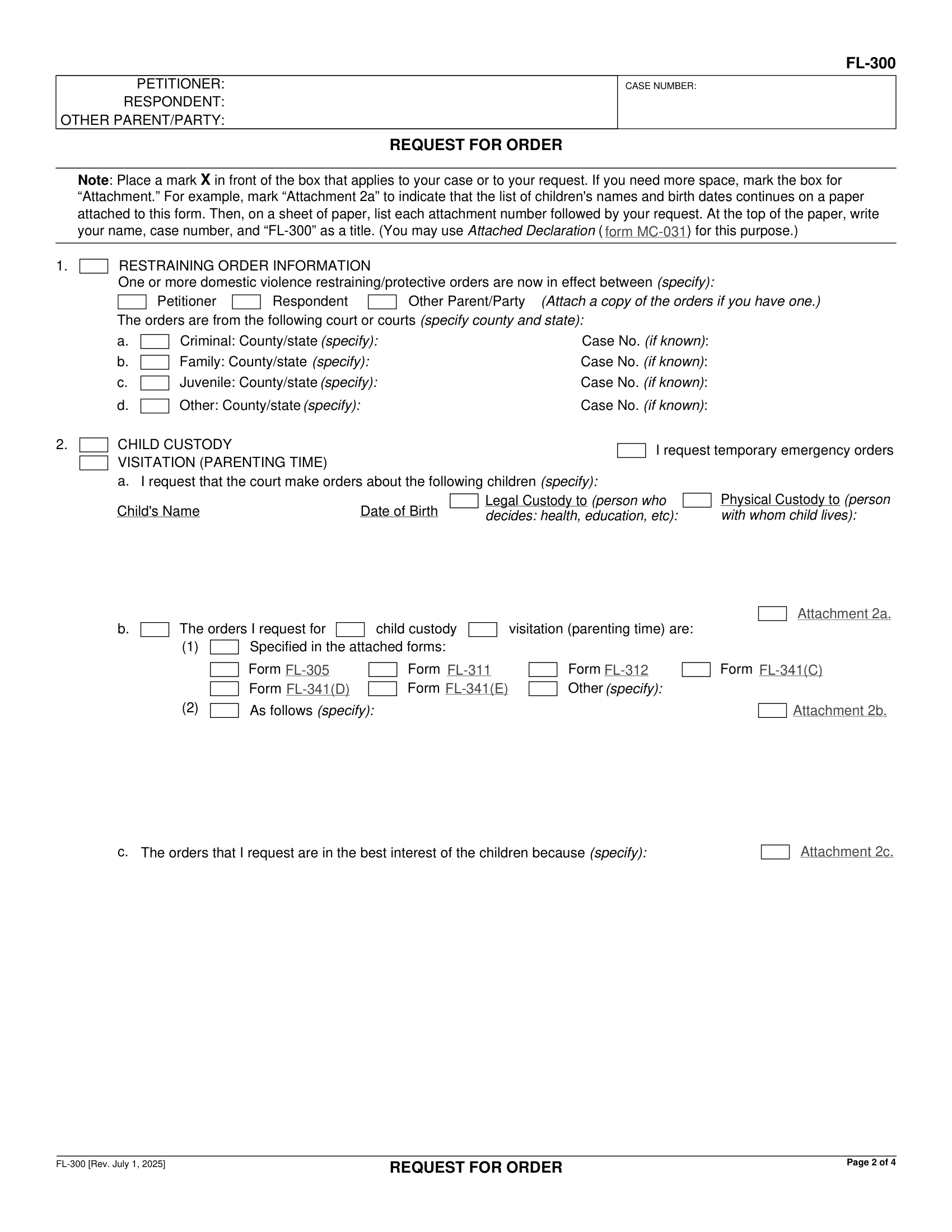
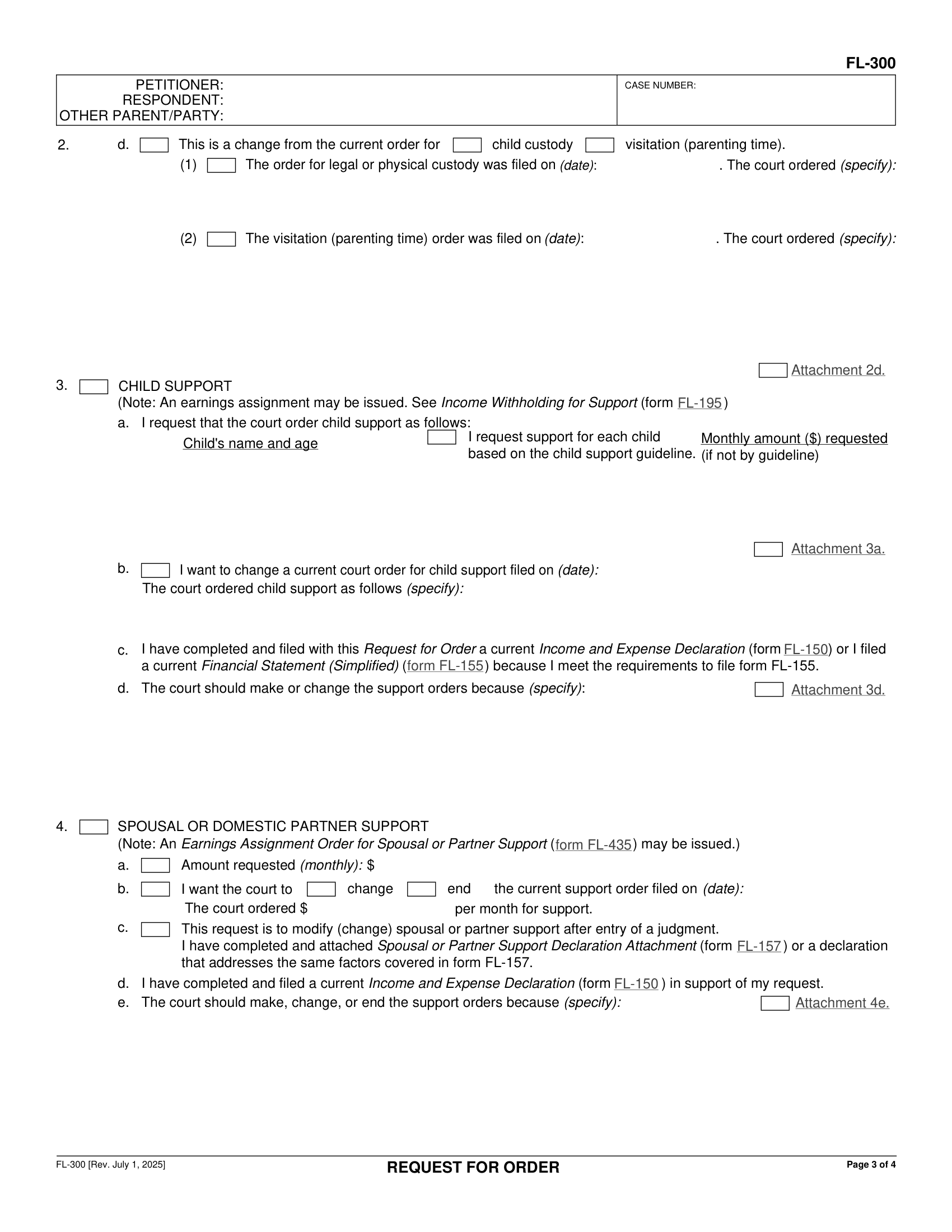
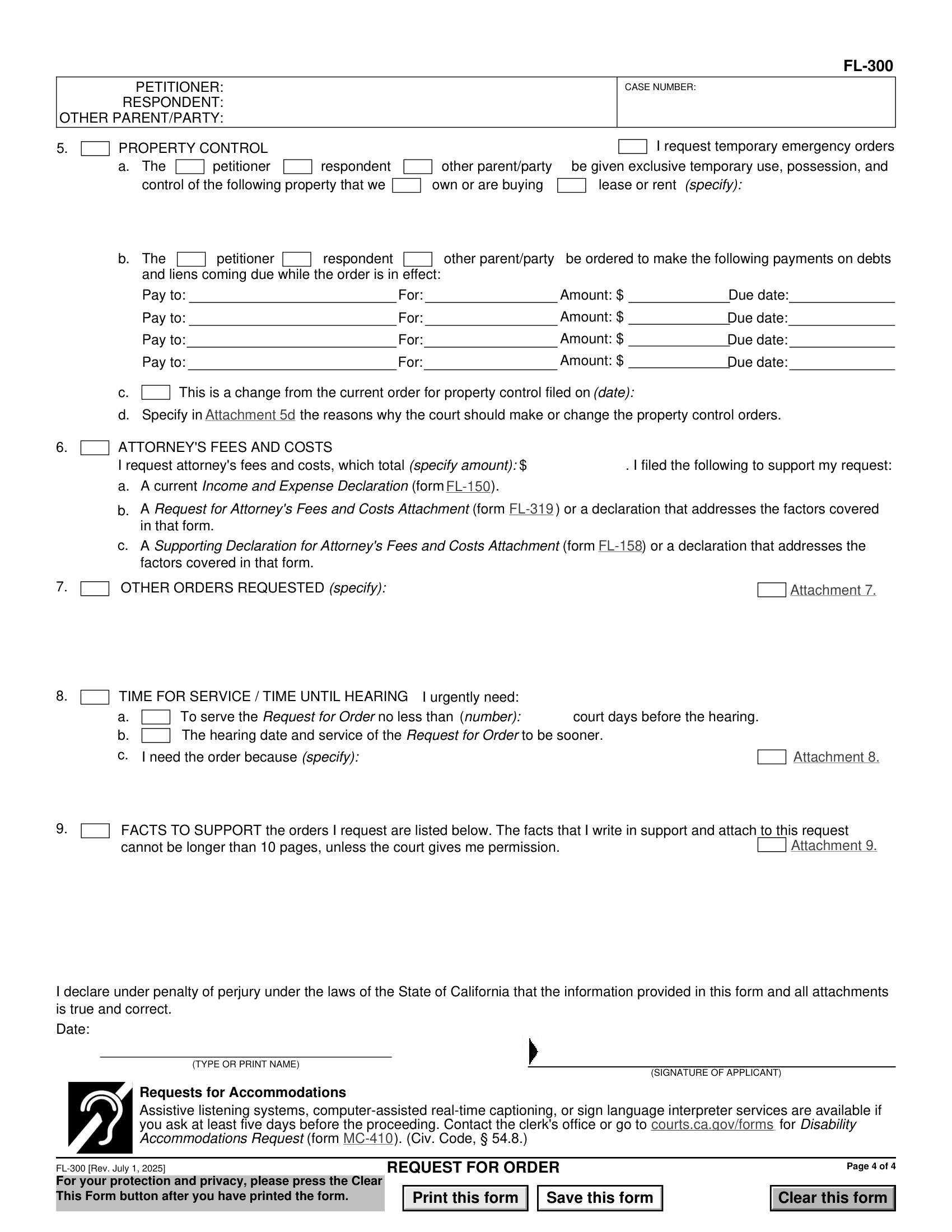
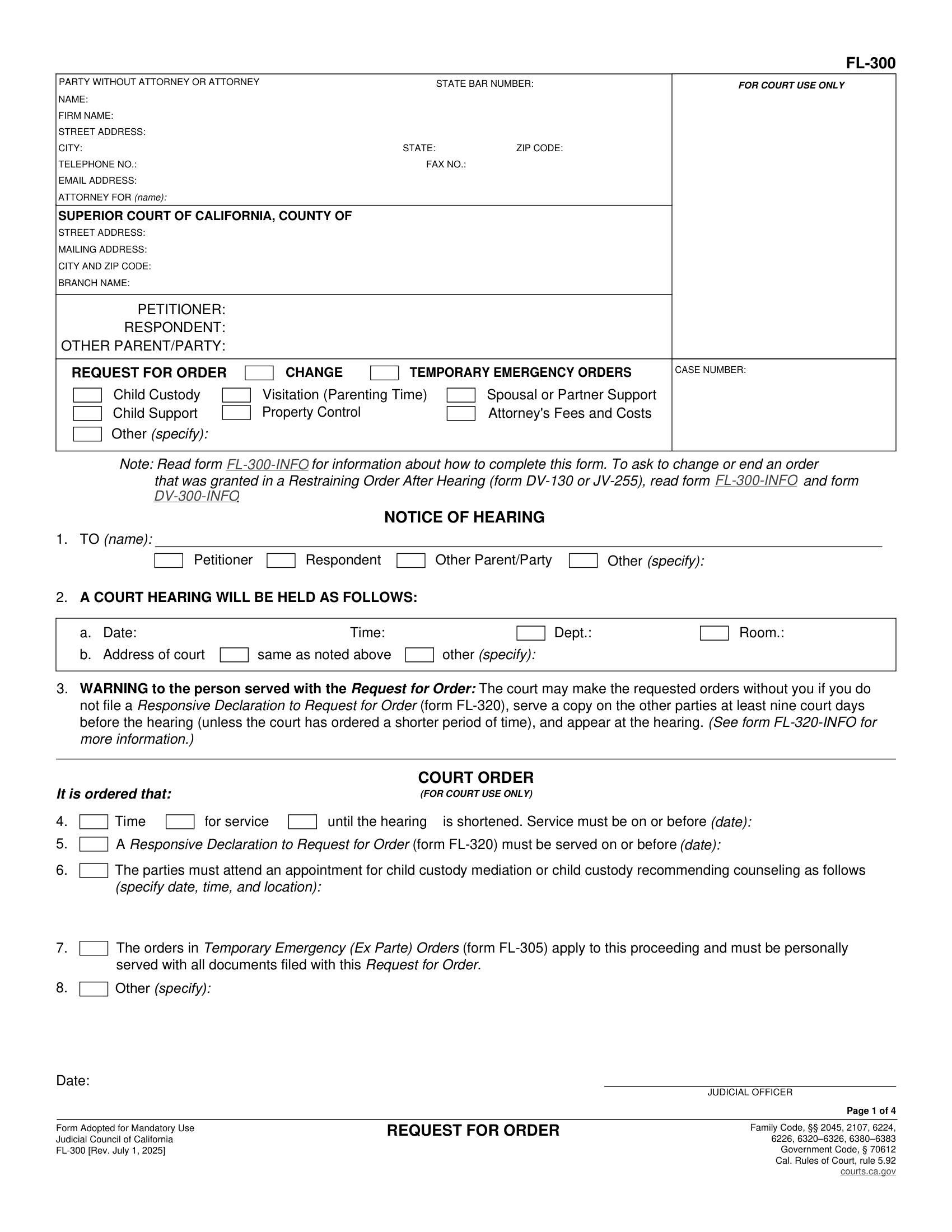
Request for Order (form FL-300) is the mandatory Judicial Council form for asking a California family court to hold a hearing and make orders. The checkboxes under the form title name the subjects it covers: Child Custody, Visitation (Parenting Time), Child Support, Spousal or Partner Support, Property Control, Attorney’s Fees and Costs, and Other (specify). Two more boxes on the same line change what you are asking for: CHANGE, if you want to modify an order that already exists, and TEMPORARY EMERGENCY ORDERS, if you need orders that take effect before the hearing date.
It is filed in an existing case. FL-300-INFO lists the situations where FL-300 is the wrong form: it is not how you ask for a domestic violence restraining order (that is the DV-100 packet, described in DV-505-INFO), not how you change or end a Restraining Order After Hearing granted under the Domestic Violence Prevention Act such as DV-130 or JV-255, not for requests that have their own mandatory form — contempt is FL-410, setting aside a child support order is FL-360 or FL-640, setting aside a voluntary declaration of paternity is FL-280 — and not the route to take when you and the other party already have an agreement.
The hearing date is set by the court, not by you. Item 2 on page 1 is left blank; the clerk fills in the date, time, department and room, keeps the original, and gives you back your copies with the hearing date and time stamped on the first page. That stamped page 1 is the Notice of Hearing you serve.
What you serve is a packet, not a single form. FL-300-INFO says the other party gets a copy of the Request for Order and everything filed with it, a copy of any temporary emergency orders granted, a blank FL-320 Responsive Declaration to Request for Order, and a blank FL-150 if you served an FL-150 or FL-155. The warning printed at item 3 of page 1 tells that party what happens if they do not respond: the court may make the requested orders without them if they do not file an FL-320, serve a copy on the other parties at least nine court days before the hearing, and appear.